Top reasons to choose this course
- Gain practical experience: you’ll engage as an applied physiology practitioner from the start of your degree, and through your placement, with a practitioner-focused learning approach that helps you develop your craft knowledge.
- Hands-on learning: access to a wide range of specialist facilities including a biochemistry lab, biomechanics lab with running track and 3D motion analysis, exercise rehabilitation gym and more.
- Enhanced employability: our emphasis on workplace learning and reflective practice ensures you’re well-prepared for your future career, helping you develop skills that employers value.
- Learn from experts: you’ll be taught by innovative researchers and active practitioners who are eager to share their expertise and help you become a skilled applied physiology practitioner.
The five pillars
Practitioner-focused learning
Practitioner‑focused learning is central to the Applied Exercise Physiology MSc, emphasising real‑world application across health, clinical and occupational contexts. From the beginning of your course, you'll engage as an applied practitioner, developing the skills and craft knowledge needed to assess risk, prescribe interventions and support diverse populations. Through client interaction, practical assessment, and workplace‑aligned learning, you'll gain a blend of hard, technical and softer interpersonal skills alongside hands‑on experience that reflects the realities of professional practice.
With a 'learn in the doing' philosophy to encourage you to take ownership of your development, our curriculum prioritises experiential learning, enabling you to translate theory into safe, effective exercise interventions tailored to individuals and populations. Opportunities such as work‑based learning and placements support professional growth while strengthening employability. This approach ensures that you are not only knowledgeable, but also confident in applying your physiology expertise with real clients. By aligning learning with industry expectations and global health challenges, this pillar prepares you to enter the workforce as a capable and adaptable exercise physiology practitioner.
We recognise that our students come with a variety of skills and experiences and we’ll draw upon these as we develop you into a well-rounded and effective applied exercise physiology practitioner.
Physiology skill-centred development
Physiology is central to every module of our course, with most sessions taking place in one of our sport and exercise science laboratories or in our teaching-focused strength and conditioning gym.
This pillar develops the technical and analytical skills required to assess, monitor and improve physiological health and performance across a range of health, clinical and occupational populations. You’ll learn how to use sophisticated equipment and techniques (for example, 12-lead ECG, spirometry, breath-by-breath gas analysis, cardio-pulmonary exercise testing, health risk stratification, neuromuscular fatigue, tolerance to environmental extremes) and advance your practice with equipment you have already used.
You will gain hands‑on experience conducting exercise testing, interpreting physiological responses, and prescribing interventions tailored to health, clinical and occupational needs. During the two-week intensive Skills for Physiological Assessment module, you’ll be on campus every day to develop your laboratory skills while profiling a client of your choice within the first six weeks of starting the degree. This module is 90% practical and fully immerses you into the course, postgraduate study and university life.
Using advanced laboratory facilities, including our environmental chambers, you will explore how the body responds to exercise under environmental stress with clinical and occupational relevance. The focus is on developing competence through practice, building your ability to select appropriate assessment tools, interpret outcomes, and apply findings in a professional context. These skills are underpinned by an understanding of how physiological systems respond to acute and chronic exercise. By centring development around practical capability, this pillar ensures you graduate with the technical expertise needed to deliver safe, effective, and evidence‑based interventions in diverse real‑world settings.
Science in practice
Science is at the heart of our MSc and embedded in a manner to enhance your applied practice.
Science in practice focuses on applying physiological knowledge to address real‑world health and exercise challenges relevant across different sectors. You will develop the ability to interpret research, evaluate evidence and apply it to the design of safe, effective interventions for individuals and populations.
The course integrates scientific understanding with practical application, enabling you to work confidently across clinical, community and occupational settings. Through hands‑on learning, you will explore how exercise can be used to manage health conditions, improve wellbeing and mitigate risk factors associated with inactivity. This pillar encourages you to draw upon and use data, apply critical thinking and evidence‑based practice, ensuring that your decisions are informed by current research and best practice guidelines. By translating science into meaningful action, you will be equipped to deliver interventions that have a tangible impact on health outcomes and quality of life.
Emotional intelligence – applied exercise physiology
In applied exercise physiology, emotional intelligence underpins your ability to work effectively with diverse populations across health, clinical and occupational settings. This pillar develops your capacity to understand and respond to the motivations, barriers and lived experiences of clients, enabling you to build rapport and deliver person‑centred interventions.
As you engage in practitioner‑focused learning and real client interactions, you will enhance become more situationally and personally aware, improve your communication, empathy and reflective practice skills, all of which are critical when supporting behaviour change and improving long‑term health outcomes. The course integrates technical knowledge with the softer interpersonal skills required in professional practice, ensuring you can explain physiological concepts clearly, support adherence to exercise programmes, and adapt interventions to individual needs.
By strengthening your emotional awareness and professional judgement, this pillar prepares you to work confidently with varied populations, from clinical groups to community and occupational settings.
Personal and professional development
You will gain 100 hours of real-world experience in areas relevant to your interests by working alongside experienced practitioners. Personal and professional development focuses on preparing you for a successful career in exercise physiology across health, clinical and occupational sectors.
Through reflective practice, work‑based learning and professional engagement, you will develop the skills and behaviours expected of a modern practitioner. The inclusion of a substantial placement experience allows you to gain practical insight into professional roles while building confidence and competence in real settings. Many of our students choose to take opportunities across multiple placement experiences outside the university, working across the public, private and charitable sectors. You will also be supported in working towards relevant certifications and professional affiliations, enhancing your employability.
Students have also helped to develop university guidance and policy for a heatwave health plan, while others worked with altitude awareness charity Para-Monte to develop altitude illness guidance. Health-based placements external to the university have included working with respiratory healthcare NHS Trusts, long COVID-specific NHS Trusts, cancer rehabilitation and prehabilitation, cardiology wards, as well as charities focused around mental health.
This pillar emphasises lifelong learning, self‑awareness and adaptability, ensuring you can respond to the evolving demands of the sector. By combining practical experience with personal and professional skill development, you will graduate ready to make a meaningful contribution to improving health and wellbeing across diverse populations.
Organisations our students have had placements with include:
- Brighton Buccaneers Wheelchair Rugby
- Lewes Rugby Club (U16 Girls squad)
- Pavilion Tennis Club
- Sussex Beacon (NHS)
- One Welbeck – London
- Breathe Easy
- In house testing and research in our labs and S&C suite.
Course structure
You will take four 20-credit core modules, each finding their root in at least one of the course’s four pillars. In addition, you will take two 20-credit option modules and complete a 60-credit final research project. Modules are delivered in different ways to enhance your learning and target relevant skill development.
The Personal and Professional Development module includes a built-in placement giving you hands-on experience improving your employability.
You will learn through a mixture of taught sessions, tutorials, group work, independent study and work-related activities. There is a strong practical element where we have a mindset of ‘learn in the doing’, as most classes take place in either our sport and exercise science laboratories, research and performance gym or a computer class with a ratio of 2:20 staff to students.
Our course is taught on two days, normally on a Tuesday and a Wednesday (see the part-time and full-time tabs for more details), and most modules are delivered across one semester.
The research project module is delivered over multiple, two-day blocks as you prepare to carry out your own research study later in the academic year.
Module assessment provides opportunities for you to show your understanding through the informed, reflective, critical and analytical application of ideas. Depending on the approach judged most suitable to test the learning outcomes, assessments could include written assignments such as essays, critiques, laboratory reports, presentations, practical laboratory technique exams and reflective documents.
Each module will be assessed separately and have formative assessments that aim to provide you with feedback on your progress as you prepare for summative assessments.
You are able to book individual tutorials with every lecturer. Group tutorials are also scheduled into our teaching programmes.
In addition to the course leader, who is responsible for overseeing your academic development, you will be assigned an academic tutor to support your academic progress and your employability.
The course is flexible in that it allows you to exit with a postgraduate certificate at the end of one semester (three 20-credit modules) or a postgraduate diploma at the end of two semesters (six 20-credit modules). You must complete the 60-credit research project to qualify for the MSc.
Areas of study
A core value of our course is ‘learn in the doing’ and we bring an explicit, practitioner-focused learning approach to developing your craft knowledge as you journey towards being an effective practitioner
We want you to gain confidence in your ability to interact with clients, design and conduct exercise testing, explain physiological responses to exercise and training and prescribe effective exercise interventions.
In taught physiology modules, you’ll experience and discuss the responses of the human body to various stimuli, including acute and chronic bouts of exercise, environmental changes (using our thermal and hypoxic chambers) and ergogenic aids which can be used to simulate peculiar clinical conditions and help you better understand human physiological responses and ultimately the benefits of exercise in healthy and clinical populations.
Our commonly used ‘solution to the problem’ approach to learning and teaching integrative physiology will help you to develop a host of laboratory skills while providing guiding principles to apply to any exercise physiology situation you encounter in the future. Most of our modules are taught in our sport and exercise science laboratories where you’ll learn to be a practitioner of tomorrow.
With Personal and Professional Development, you’ll also gain vocational skills to give you a competitive edge in the job market. The placement opportunities and chances to network in the world of exercise physiology will ensure you graduate with a foot firmly in the industry and an improved CV. You will spend around 100 hours with one or more organisations related to the practice of exercise physiology which will allow you to apply your academic knowledge in an applied setting.
We use lectures to introduce themes around emotional intelligence and ethical and moral dilemmas in the workplace and seminars as a teaching vehicle for you to reflect on your experiences and hear the experiences of others as you develop to being a practitioner.
To complement the physiology you’ll learn, the client and your safety as a practitioner are discussed from a health and safety and risk stratification perspective, but also with awareness towards the ethical implications. This is an important feature as you move towards your own research project where you’ll embark upon a project that links to your chosen employment route.
You will be able to choose to write your research project up as a dissertation, a research paper or a case study report; some of our past students have published their own work. Your ability to work with data and illuminate the meaning by using different statistical approaches is another important feature of the course and we will guide you to be able to use a range of concepts and techniques on physiology data you collect.
Modules
Core modules
- Skills for Physiological Assessment
During this module you will develop the critical awareness, knowledge and skills associated with physiological assessment, including health and safety, equipment, test types and physiological profile determinants. The module is heavily based on practical demonstration and hands-on experience, and considers measurement reliability, accuracy and sensitivity when testing the exerciser. You will work in small groups on pre-designed experiments and problem-solving.
- Science in Practice
This module uses a problem-based learning approach which enables you to develop a critical insight into sophisticated research methodologies used within sport and exercise science through questioning complex research enquiries with active researchers. You will also enhance your research-specific computer skills.
- Clinical Exercise Physiology
During this module you will examine a wide range of populations where risk of disease may be present and consider the appropriateness and effectiveness of programmes designed to improve quality of life. During practical-based laboratory sessions, you will develop competencies in laboratory testing. You will also reflect on your personal skills development and career aspirations.
- Personal and Professional Development
Through a combination of contact with others already set on a career in sport and exercise science, reflection on your personal, academic and professional skills, and effective communication and planning, this module will help you assess your learning and professional needs. You will undertake a 100-hour work placement in order to gain professional experience and meet learning objectives. This placement may be volunteering, professional practice and/or employment, engagement with local community and university partnerships or professional mentoring.
- Final Research Project
This module enables you to use the skills, knowledge and interests you’ve developed throughout the course to design and carry out an independent research project on a topic relevant to your programme of study. The module will further develop your critical thinking and understanding of research methodologies and techniques.
Options*
- Exercise Tolerance (Integrative Physiology)
This module explores factors that affect exercise performance and cause fatigue. You will look at how the body responds to different exercise intensities and explore a variety of interventions to improve exercise tolerance. You will compare and contrast available strategies to alleviate fatigue and discuss their appropriateness for specific groups of people.
- Science of Physical Performance and Training
This module will develop your understanding of the theories behind physical performance and training, including the physiological, nutritional and biomechanical principles. You will learn to assess research in this area and apply evidence-based methods in your work as a strength and conditioning coach.
- Applied Environmental Physiology
This module provides an advanced understanding of the physiological and metabolic demands of exercise under extreme environmental conditions, focusing on methods to alleviate the negative consequences of these hazardous environments. Through a blend of theoretical study and self-designed practical laboratory sessions you will improve your competence in physiological data collection, interpretation and communication.
*Option modules are indicative and may change, depending on timetabling and staff availability.
While there is an expectation for you to share the position of physiologist and exerciser during laboratory practicals, this is not compulsory, making the course suitable for those with a disability or health condition.
Find out how we support students with disabilities.
Full-time route
Our course is taught over two days, usually Tuesdays and Wednesdays, however days are subject to timetabling and may change from one year to the next. In addition, you are expected to practice skills and carry out physiological assessment and skill development outside the taught element of the course.
Example timetable for full-time study:
Semester 1
- First two weeks of the course: Skills for Physiological Assessment module
- Throughout the 10 weeks: Science in Practice module and option module
Semester 2
- Throughout the 10 weeks: Clinical Exercise Physiology module and option module
Throughout the year
- Personal and Professional Development module
- Final Research Project
Part-time route
Our course is taught over two days a week: usually Tuesdays and Wednesdays. In addition, you are expected to practice skills and carry out physiological assessment and skill development outside the taught element of the course.
As a part-time student you will discuss your personal circumstances and progress on a regular basis with the course leader. Most part-time students complete their course in two years, with some doing so in three years. Some select a part-time mode of study if they want to spend longer gathering relevant experience to improve their employability.
Our approach is to accommodate you in the best way we can and optimise your learning throughout your study. The choice of modules taken each year may therefore depend on your own unique circumstances.
We can adapt your timetable to fit with your other commitments. Some students have attended taught sessions just one day a week for the majority of their time with us.
Example timetable for part-time study over two years:
Year 1
- First two weeks of course: Skills for Physiological Assessment module
- Tuesdays throughout Semester 1: Science in Practice module
- Tuesdays throughout Semester 2: Clinical Exercise Physiology module.
Year 2
- Wednesdays throughout Semester 1: Personal and Professional Development module and Option module 1
- Wednesdays throughout Semester 2: Personal and Professional Development module and Option module 2
- Throughout the year: Final Research Project.
Facilities
As a Brighton student you’ll use our Chartered Association of Sport and Exercise Sciences (CASES) accredited sport science facilities which include:
- biochemistry lab
- biomechanical lab with running track and 3D motion analysis
- blood analysis lab
- data analysis room
- exercise rehabilitation gym
- kinanthropometry lab
- neuromuscular lab housing our isokinetic dynamometers
- psychology lab
- physiology lab
- research lab
- strength and conditioning suite
- environmental physiology lab which houses a dual temperature and hypoxic environmental chamber
- VR screen room with Igloo 210 screen.
You may also use our extensive Falmer campus sport facilities as part of your studies. These include outdoor grass football pitches, floodlit synthetic pitches and courts, indoor swimming pool, large fitness suite and sports hall with netball, volleyball, basketball and badminton courts, and cricket nets.
You can view our facilities when you visit us. You can also get a feel for them by watching the short video and checking out our Falmer campus information.
Take a video tour of our labs with technician Bill.
Staff profiles
Dr Neil Maxwell, course leader
Dr Neil Maxwell is a Reader of Applied Environmental Physiology at the University of Brighton.
Neil aims for his research and innovation to translate into advocacy globally on how to live and engage in effective physical activity safely in inhospitable environments, prioritising risk stratification and mitigation/therapeutic strategies to benefit at-risk populations (eg, athletes, occupational and clinically symptomatic). He leads the Environmental Extremes Laboratory, where his research focus is towards heat reactions during exercise and evaluating practical heat mitigation methods (eg, heat acclimation, pre and per cooling and hydration manoeuvres) across sport, health and clinical populations. He also investigates how to determine altitude tolerance while working with altitude awareness charity Para-Monte.
Neil believes his experience in education has engendered an empathy when working with the different needs of students and he is prepared to try unorthodox teaching methods in the context of sport and exercise science, and particularly physiology, to stimulate their interest and make learning enjoyable.
As course leader for the MSc in Applied Exercise Physiology and Applied Sport Physiology degrees, Neil believes his primary role is to facilitate student development of those hard, technical and soft interpersonal skills that are essential to being an effective applied physiology practitioner.
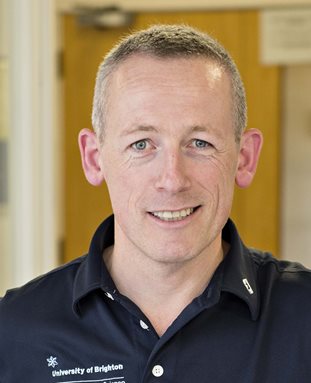
Other key members of the teaching team
Sport at Brighton
Sport Brighton
Sport Brighton brings together our sport and recreation services. As a Brighton student you’ll have use of sport and fitness facilities across all our campuses and there are opportunities to play for fun, fitness or take part in serious competition.
Find out about Sport Brighton.
Sports scholarships
Our sports scholarship scheme is designed to help students develop their full sporting potential to train and compete at the highest level. We offer scholarships for elite athletes, elite disabled athletes and talented sports performers.
Find out about sport scholarships.
Brighton Cricket Academy
Develop your cricketing skills in the UK’s largest indoor cricket facility alongside studying for a degree. Whether you can already play or you’re new to the game offers the opportunity to train with top coaches in our world-class training environment.
Find out about the Brighton Cricket Academy.