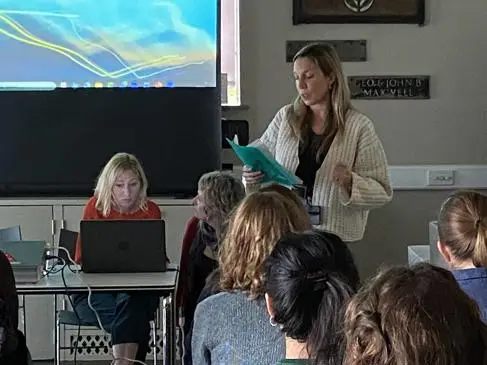
Speakers at the Interpreting Eric Gill symposium
The afternoon was introduced by Dr Claire Wintle, Director of the Centre for Design History, who outlined the importance of co-creation but also the commitment and resource that this can take, not only in individual exhibitions but in the way the whole sector learns and develops its practice and the ways it can be held to account and adapt. Steph Fuller, Director/CEO of Ditchling Museum of Art + Craft explained the collaborative process and the view that the earlier Eric Gill: The body exhibition (2017) had given inadequate representation of Gill’s abused daughters, with nothing about their later life or agency. Steph explained the process by which the current exhibition collaborated with and supported those who found a range of personal and shared meanings in the display of this challenging material. She also explained the importance of strong policy and a recognition that, between the extremes of cancelling Gill or allowing all things in art, there are ways of taking responsibility for balancing how artists’ works and lives are collected, displayed and studied.
Dr Ann Sumner, Former Chair of the Management Committee of the Methodist Modern Art Collection, spoke online about the polarisation they faced when considering their own works by Gill, particularly the ‘Annunciation’ of 1912. Fiona, a survivor, or veteran, as she preferred to identify, asked questions of biographies and obituaries that significantly failed to give justice to the female influences on the Gill family and often failed to recognise the consequences of abuse, relying on the fame and talents of artists to justify all their actions as nobly intended. The University of Brighton’s Professor Lesley Murray concluded by sharing an understanding of the role of art in the engagement with and representation of real life, drawing on her own recent project on the immobilities of gender violence, which drew on accounts from minoritised groups created in the UK and Mexico during the Covid pandemic.
Collections and the ways galleries and museums display them, particularly with public funds and for public audiences, have a powerful potential to interact with that public, to share what’s challenging but also to welcome new voices into the dialogues and become a present in the realities many people face.
Dr Claire Wintle, researcher and lecturer in design history, museum and heritage studies, introduced the symposium.