A PhD in arts practice takes you into a world where human knowledge and understanding are rooted in artistic and cultural production, experiment and wider engagement with the arts.
It is a research degree that has developed for the needs of practising professional, amateur and student artists, also community arts providers, curators and directors, inclusive arts practitioners, art therapists -- all those who use creative involvement in the arts as a way to develop, preserve and disseminate knowledge and understanding.
Practice-led research in the arts can lead to knowledge in many ways. It can arise in the methods of artists' practices, artists' interventions in society, the artefacts and exhibitions produced and the ways communities engage with art. Art can communicate and question knowledge; it can disrupt what is taken for granted and define the limits of knowledge. Arts research can provide knowledge about practice and engagement with art, but can also be a means through which researchers understand wider issues, intersecting for example with politics, sexuality, ecology, health or psychology.
Studying towards a PhD in art and creative practices will take you towards new thinking and new levels of achievement. It will help you look at your artistic practice in different ways.
Do I need to be a practising artist to do a practice-led PhD?
Applicants will be expected to demonstrate their current artistic practice. While many have studied an arts practice degree at undergraduate or masters level, we are happy to receive approaches based on experience in your chosen field.
While a level of competence is expected, a research enquiry through arts practice is separate from critical or popular success as an artist. There is no expectation that doctoral students have an established history of public exhibition or critical success.
How long does a PhD in art take?
Candidates normally study for three years full-time or six years part-time.
How is a PhD in art examined?
- Candidates for the doctoral degree will present evidence of their practice often in the form of artefacts, detailed print or filmic reproduction and/or an exhibition.
- They will also submit a thesis, usually of around 40,000 words, which situates practice, current knowledge in the field and reflects on the new knowledge generated.
- A live interview exam (viva voce or 'viva') then brings two experts together with a chair of the examination panel at which the candidate can give explanations and answer questions.
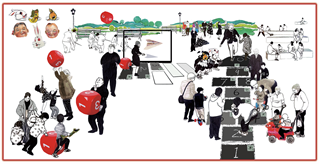
Wei Yuan - Research explores the relationship between elderly people's perception of past and present urban life through created interactive games and participatory Augmented Reality (AR) animations with follow-up interviews and surveys.
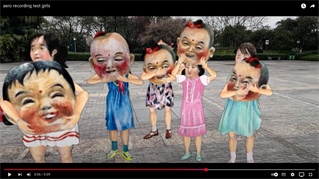
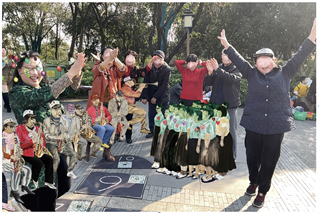
(Top to bottom) Graphic describing research process; screencapture of Augmented Reality (AR) artwork based on elderly people's experiences of park games; acclimatised participants play with and are photographed with the AR characters.